
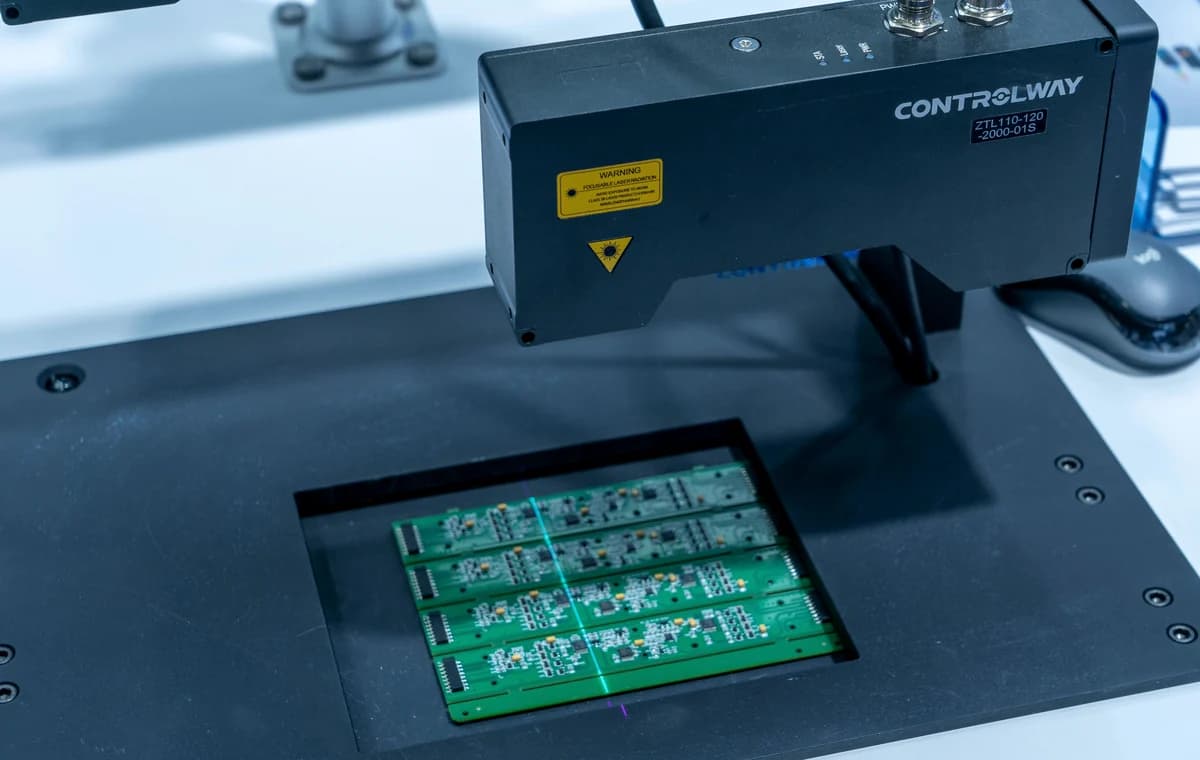
Production is complete. Your supplier sends photos of the finished goods stacked in their warehouse and says "ready to ship." You approve the shipment, the container is loaded, and six weeks later 2,400 steel brackets arrive at your warehouse in Newcastle.
Except 340 of those brackets have a wall thickness 0.3mm below your minimum specification. Invisible in a photo. Invisible to the forwarder. Invisible until your fabrication team tries to weld them and the joint fails under load test. Rework cost at your end: £4,500. Return-to-supplier cost: £8,000+ in freight alone. The supplier offers a 5% discount on the next order.
A pre-shipment inspection (PSI) — £350, one day, while the goods are still in the supplier's warehouse — would have caught this before the container was sealed. This issue is the operational guide: what PSI checks, who to hire, how to specify the sampling plan, and the one contract clause that ties your final payment to a PSI pass.
Reader walks away knowing
- For context: where else can you get this
- What PSI checks — and what it does not
- The three providers — costs and trade-offs
- The AQL sampling plan — explained for buyers
For context: where else can you get this
SGS and Intertek will sell you an inspection, but their marketing pages do not help you decide whether you need one or how to specify it. ISO 2859-1 defines the sampling methodology, but it costs CHF 227 (approximately £200) and is written for statisticians. Your forwarder may offer to "arrange inspection" but will not explain AQL levels or defect classification. This article gives the buyer-side framework: three provider tiers compared on cost and independence, the AQL levels explained in plain language, and a contract clause that converts PSI from an expense into a payment condition.
What PSI checks — and what it does not
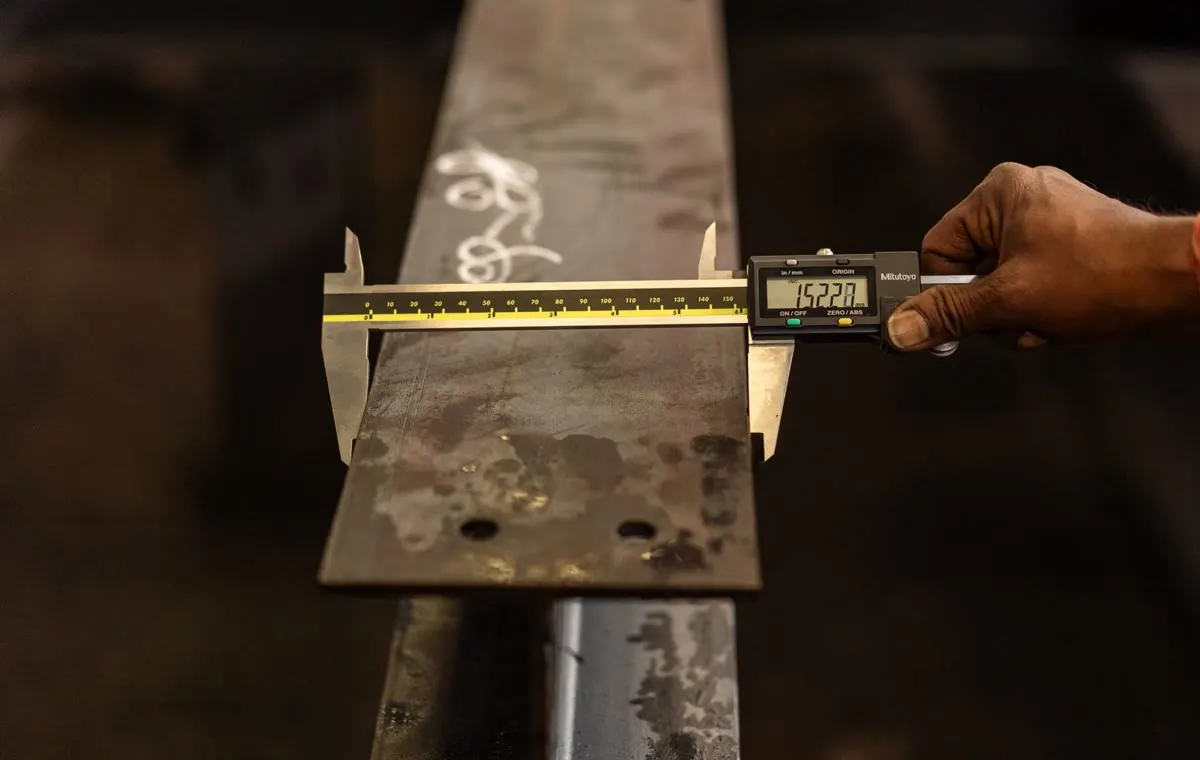
A standard pre-shipment inspection covers six areas: quantity verification (counting units against the purchase order), specification check (measuring a sample of units against the drawing or specification), packaging inspection (carton quality, palletisation, moisture protection for ocean freight), marking verification (labels, barcodes, country-of-origin marking), photographic evidence (documented record of the batch condition), and quality grading per AQL sampling plan (pass/fail against statistical acceptance criteria).
What PSI does not cover. PSI is a point-in-time visual and dimensional check. It does not test long-term durability. It does not detect hidden material substitutions — a cheaper alloy that passes visual and dimensional checks but fails under load after 18 months of service. It does not verify sub-supplier quality for components sourced from the factory's own supply chain. And in rare cases, it does not prevent post-PSI batch swap — where the inspected batch is replaced with a different batch between inspection and container loading.
Understanding these limits is as important as understanding the checks. PSI catches what is visible and measurable on the day. Everything else requires other tools — destructive testing, material certificates, container-loading supervision.
The three providers — costs and trade-offs
Three tiers of PSI provider exist. Each has a different cost, turnaround, and best-fit order profile. The fees below are working budget ranges (benchmarks as of 2026), not fixed rates.
International firms: SGS, TUV, Bureau Veritas, Intertek
Working budget: £350-£700 per inspection day (benchmark: SGS $300-600/man-day).
What you get. Full English-language report in a structured format recognised by UK insurers and customs authorities. Brand credibility for downstream auditors.
Best fit. Regulated sectors. First orders with unproven suppliers. Order values above £40,000.
Limitation. Booking lead time is 5-10 working days. The inspector covers your product category but lacks the supplier-specific context a regular on-the-ground agent develops.
Chinese mid-tier QC firms: QIMA, V-Trust, MTS
Working budget: £200-£450 per inspection day (benchmark: QIMA from $309/man-day; V-Trust approximately $249/man-day; AQF from $298/man-day).
What you get. English-language report delivered via online portal. QIMA's platform includes photo-tagged defect maps and (for consumer goods) AI-flagged summaries. Faster booking — typically 3-5 working days. Transparent pricing published online.
Best fit. Standard industrial goods from suppliers who have passed a factory audit. Repeat orders where the product specification is stable. Order values in the £20,000-£60,000 range.
Limitation. AI defect-flagging is trained predominantly on consumer goods (textiles, electronics) and may miss industrial-specific issues such as weld porosity or surface-finish roughness outside specification. Treat digital summaries as a first pass, not a final answer.
Self-organised Chinese-side agent
Working budget: £150-£300 per inspection day (benchmark: TradeAider $199/man-day; independent freelance inspectors $150-300/man-day).
What you get. Fastest booking (1-3 working days). Local-language access to the factory floor. The agent can verify batch identity, check material certificates against agreed sub-suppliers, and attend container loading. Reports are typically less structured than international-firm output.
The AQL sampling plan — explained for buyers
Expected inspection value = avoided defect cost × probability of catching the defectExample: if a missed defect would cost £4,500 to rework and a one-day PSI costs £350, the inspection only needs to reduce that risk by about 7.8% to break even.AQL stands for Acceptance Quality Limit. It is the maximum percentage of defective units in a batch that the buyer considers acceptable. The sampling methodology is defined in ISO 2859-1:2026 (Edition 3, published January 2026, replacing the withdrawn 1999 edition). The related standard in the US is ANSI/ASQ Z1.4-2008. Both use the same AQL framework and tables.
You do not need to buy the standard or understand the statistical theory. You need to know three things.
First: defect classification. Before the inspection, you define three categories. Critical defects (safety hazard or regulatory non-compliance) — AQL is 0, meaning no critical defects are acceptable. Major defects (the unit does not perform its intended function, or a dimensional deviation exceeds your tolerance) — AQL is commonly 2.5. Minor defects (cosmetic issues that do not affect function — surface scratches, packaging marks) — AQL is commonly 4.0. The classification is buyer-defined. The inspector applies your classification, not their own.
Second: sample size. The sample size depends on the batch size and the General Inspection Level. For a batch of 2,400 units at General Inspection Level II (the standard level), the ISO tables specify Code letter K and a sample size of 125 units. The inspector randomly selects 125 units from the batch and inspects each against the specification.
Third: accept and reject numbers. For 125 units at AQL 2.5: if 7 or fewer units have major defects, the batch passes. If 8 or more have major defects, the batch fails. For AQL 4.0 (minor defects): accept 10, reject 11. These numbers are derived from the ISO tables. The inspector references them as part of the booking process.
How to specify AQL on the booking. When you book the PSI, state: "General Inspection Level II. AQL 2.5 for major defects. AQL 4.0 for minor defects. Critical defects: AQL 0. Defect classification per the attached specification." Attach a one-page defect classification that defines what constitutes critical, major, and minor for your specific product.

The contract clause that changes everything
One clause converts PSI from a cost the buyer pays into a quality gate the supplier is incentivised to pass:
"Final 70% payment due within 5 working days of buyer receiving PSI report graded 'PASS' from [nominated inspector]. If PSI grades 'FAIL,' supplier shall rework defective units at supplier's cost and submit to re-inspection within [X] working days. Re-inspection cost is borne by supplier."
This clause has three effects. First, it aligns the supplier's incentive with the inspection outcome — they do not get paid until the goods pass. Second, it makes rework the supplier's cost problem, not yours. Third, it establishes the buyer's nominated inspector as the quality arbiter, not the supplier's own QC department.
The legal backstop for this clause in B2B contracts is the Sale of Goods Act 1979, section 14(2): there is an implied term that goods supplied under a business contract are of satisfactory quality. Section 14(6) classifies this as a condition — not a warranty — meaning breach entitles the buyer to reject the goods and treat the contract as terminated. The PSI clause operationalises this right before the goods leave China, rather than after they arrive in the UK.
Gatekeeper view: what is visible from China-side
A Chinese-side inspector can verify three things that a standard international PSI commonly does not cover.
Batch identity. Is the batch being inspected actually the buyer's batch — or a show batch the factory keeps for inspections? A Chinese-side agent can cross-reference serial numbers or batch markings on the inspected units against the production order, reading the factory's internal production records in Chinese. If the batch labels do not match the production order, the inspected goods may not be the goods that ship.
Materials sub-supplier verification. The agent can check material certificates against the agreed sub-suppliers. If the purchase order specifies steel from a named mill, the material certificates should trace to that mill. A Chinese-side agent can read these certificates in the original language and flag discrepancies.
Container-loading supervision. The highest-risk window in the entire PSI process is the gap between inspection and container loading. In rare cases, a dishonest supplier swaps the inspected batch for a lower-quality batch before loading. Attending container loading and photographing the seal number applied to the container closes this window. The buyer matches the seal number on the loading photos to the seal number on the bill of lading. If they do not match, the container was opened after the agent left.
Where this framework breaks
Hidden material substitutions. A cheaper alloy that matches the specified dimensions and passes a visual check but fails under mechanical load testing. PSI catches dimensional and visual defects. It does not catch material-grade fraud without destructive testing — which adds cost (£200-£500 for lab analysis) and time (3-5 working days for results). For safety-critical applications, consider specifying destructive testing of sample units as part of the PSI scope.
Long-term durability. PSI is a snapshot. It does not predict how the product performs after two years of field use. If your product has durability requirements, the golden sample (Issue #21) and an accelerated-life test protocol are the correct tools. PSI confirms the batch matches the golden sample today.
Very small batches. For batch sizes under 50 units, AQL sampling may result in inspecting nearly the entire batch. At that point, 100% inspection may be more cost-effective than statistical sampling. The economics of PSI assume batch sizes where sampling saves time.
Established suppliers. For a supplier with 10+ successful shipments and a historical defect rate near zero, the £350 PSI cost may not be justified for every shipment. Consider reducing inspection frequency to every third or fourth order, while maintaining the PSI contract clause so the mechanism exists if needed.
Post-PSI swap. Even with a PSI pass, container-loading supervision is the only countermeasure against batch swap. If you cannot arrange loading attendance, the residual risk exists. It is rare, but the consequence is receiving goods that were never inspected.
Regulatory time limits for defective imports. If a defective batch is discovered after UK arrival, HMRC allows duty repayment or remission for defective or non-compliant goods — but the claim must now be made within 1 year, reduced from the previous 3-year window (updated June 2025). This regulatory change strengthens the economic case for catching defects before shipment, while the goods are still in the supplier's warehouse and rework is a local-labour cost.
Trends layer
As of May 2026, Shanghai-North Europe container rates remain volatile. Red Sea diversions have extended transit times by 10-14 days since late 2023, increasing the carrying cost of defective goods discovered post-arrival. The economic case for pre-shipment detection — while goods are still in the supplier's warehouse and rework is a local-labour cost rather than a transatlantic return-freight cost — has strengthened. Mid-tier QC firms (QIMA, V-Trust) are simultaneously expanding English-language reporting and online booking, lowering the friction for UK first-time industrial buyers. QIMA's online portal now offers AI-flagged defect summaries, though these are trained on consumer-goods patterns and should be treated as a first pass for industrial products.
Coming up
Issue #24 (CSG-08 worked example): walking through an actual PSI report — what to read, what to ignore, and how to make the pass/hold/fail decision on a real inspection of the 2,400 steel brackets.
Sources
SGS, Intertek, QIMA, V-Trust, AQF and TradeAider service references, ISO 2859-1, ANSI/ASQ Z1.4, the Sale of Goods Act 1979, and HMRC defective-import repayment guidance support the inspection-provider, AQL, payment-clause and post-arrival defect review points in this guide. Accessed or reviewed as part of the 2026-06-02 guide migration/review.
Control points before commitment
- Add a PSI clause to your next purchase order: "Final 70% payment due within 5 working days of buyer receiving PSI report graded 'PASS' from [nominated inspector]. If PSI grades 'FAIL,' supplier shall rework at supplier's cost and submit to re-inspection."
- Book PSI 7-10 days before the supplier's estimated production completion date. This gives time for the inspector's scheduling and for rework if the first inspection fails.
- Specify AQL on the booking: "General Inspection Level II. AQL 2.5 for major defects. AQL 4.0 for minor defects. Critical defects: AQL 0." Attach a one-page defect classification specific to your product.
- Request that the inspector photograph the container seal number at loading. Match this number to the seal number on the bill of lading when the documents arrive.
- File every PSI report alongside your customs entry documentation. It serves as evidence of pre-import due diligence if a dispute arises over goods quality, and supports any HMRC duty-repayment claim if defective goods are discovered post-arrival.
Where Plinth&Co adds control
Plinth&Co helps define inspection scope, defect classes and release triggers so pre-shipment checks protect buyer leverage before the balance payment and shipment leave China. This is a buyer-side planning note, not legal, tax, customs or carbon-accounting advice; confirm final treatment with appointed providers or qualified specialists before acting. This is not legal advice, not tax advice, not customs advice and not carbon-accounting advice. Plinth&Co is not a factory. Plinth&Co is not a customs broker. Plinth&Co is not a tax adviser. Plinth&Co is not a law firm. Plinth&Co is not a carbon-accounting adviser.
Request a sourcing review