

You found a supplier on Alibaba. They passed your initial due-diligence checks. The quote looks competitive. Now they say "we can send you a sample" — so you reply "yes, send me a sample" and wait.
That vague request gets you an off-the-shelf item the supplier already had on the shelf. Not a unit produced to your spec. Not a contractual quality reference. Not proof that the factory can hit your tolerances at volume. Meanwhile, you are debating whether to spend £600 on a factory audit without knowing what that audit actually proves — and, more importantly, what it does not.
There are four distinct sample types, each proving different things. There are three tiers of factory audit with different break-even points. This issue ranks both checks against your order size and product criticality, so you spend verification budget where it pays back.
Reader walks away knowing
- For context: where else can you get this
- The four sample types — what each proves
- The factory audit decision tree
- What a passing audit does not guarantee
For context: where else can you get this
GOV.UK gives general import guidance but nothing on China-specific factory audits. Marketing pages from international inspection firms describe their services but do not help you decide whether you need them. Reddit threads offer anecdotes, mostly for consumer goods and Amazon FBA. Forwarders recommend "get an audit" without explaining the three tiers or the break-even calculation. This article structures the decision: which sample type to request, when each audit tier pays back, and what a passing audit does not guarantee — specific to UK industrial buyers sourcing engineered products from China.
The four sample types — what each proves
The word "sample" covers four distinct products. Requesting the wrong one wastes a week and teaches you nothing.
Off-the-shelf sample. The supplier sends a unit they already have in stock. It is their standard product, not yours. It proves the factory makes something in this category. It does not prove they can produce to your specification, hit your tolerances, or use your materials. Cost: typically free or at unit cost plus DHL (£30-£60 shipping). Timeline: 3-5 days.
Golden sample. A unit produced specifically to your drawing, using the materials you specified, with a written test report on your critical dimensions. This is the contractual quality reference. When you sign off the golden sample in writing, you are saying: "production units must match this." Everything downstream — pre-production verification, pre-shipment inspection, dispute resolution — references the golden sample. Cost: unit production cost (typically higher than per-unit batch cost) plus DHL (£60-£100 for industrial parts). Timeline: 7-14 days.
Pre-production sample (PPS). The first output from the production line after tooling is complete. It proves the tooling works and the production process can replicate the golden sample at the start of a run. It does not prove the process will hold over 2,400 units. Cost: included in production setup (no separate charge if requested early). Timeline: production start + 2-5 days.
Mass-production sample (MPS). Units pulled from the actual production batch, typically at 30%, 50%, and 80% completion. These prove consistency through the run. An MPS showing drift at 50% completion catches tolerance creep before the batch is finished. Cost: no separate charge (part of PSI workflow). Timeline: during production.
The critical distinction. Only the golden sample sets the contractual quality reference. If you skip it, every later check — PSI, dispute, warranty claim — lacks a signed-off benchmark. Specifying a useful golden sample request sounds like this: "Produce one unit per the attached drawing, using the materials specified, with a written test report on [critical dimensions and finish], shipped via DHL at our cost."

The factory audit decision tree
Audit payback threshold = avoided failure cost ÷ audit costExample: if a £600 audit can reasonably prevent a £6,000 unusable-batch risk, the protection ratio is 10:1. If the maximum plausible loss is £900, the same audit may be excessive unless the product is safety-critical.Three tiers of audit, each appropriate for different order profiles. These are working budget ranges (benchmarks as of May 2026), not fixed rates — get a current quote before committing.
Tier 1: Chinese-side agent
Working budget: £200-£500 (2025-2026 benchmark: independent inspectors in China charge $150-300/man-day; V-Trust approximately $249/man-day; TradeAider $199/man-day).
Timeline: 3-5 working days from booking to report.
What it covers. Visual inspection of the factory floor. Machinery photo evidence. Address confirmation. Workforce observation. Basic production-capability assessment.
Best fit. Orders from new suppliers in the £20,000-£40,000 range with standard industrial goods. The audit confirms the factory exists, has relevant equipment, and appears operational. It does not produce a formal report recognised by UK insurers or downstream auditors.
Tier 2: International firm (SGS, TUV, Bureau Veritas, Intertek)
Working budget: £600-£1,200 (benchmark: SGS charges $300-600/man-day; a standard industrial-goods audit takes 2-3 man-days).
Timeline: 5-10 working days from booking to formal English-language report.
What it covers. Facility verification. Production capability assessment. Quality management system review against ISO 9001:2015 clauses 7.1 (Resources), 8.5 (Production and service provision), and 8.6 (Release of products and services). Social compliance overview. Documentation review. The report is structured, English-language, and recognised by UK insurers and downstream supply-chain auditors.
Best fit. Orders above £40,000. Regulated sectors (medical, automotive, aerospace). First order with a supplier the buyer intends to scale. Any order where the buyer's downstream customer requires documented supply-chain audit evidence.
Tier 3: Full ISO or sectoral compliance audit
Working budget: estimated from £2,500 (directional benchmark for a single-site audit by an accredited body such as BSI, TUV, or SGS, covering Stage 1 documentation review and Stage 2 on-site audit).
What a passing audit does not guarantee
This is the most important section in this article.
A passing audit confirms the facility exists. It confirms machinery is present. It confirms broad production capability. It confirms (if Tier 2 or above) that a quality management system is documented.
A passing audit does NOT confirm that this specific batch will meet your tolerances. It does not confirm lead-time reliability. It does not confirm that the materials sub-supplier will remain the same between audit and production. It does not confirm that the factory will not sub-contract your order to a smaller workshop after the audit.
The audit assesses capability. The pre-shipment inspection (CSG-08) assesses the batch. Both checks have a role. Skipping either leaves a gap. Confusing one for the other leaves you believing a capability assessment guarantees batch quality.
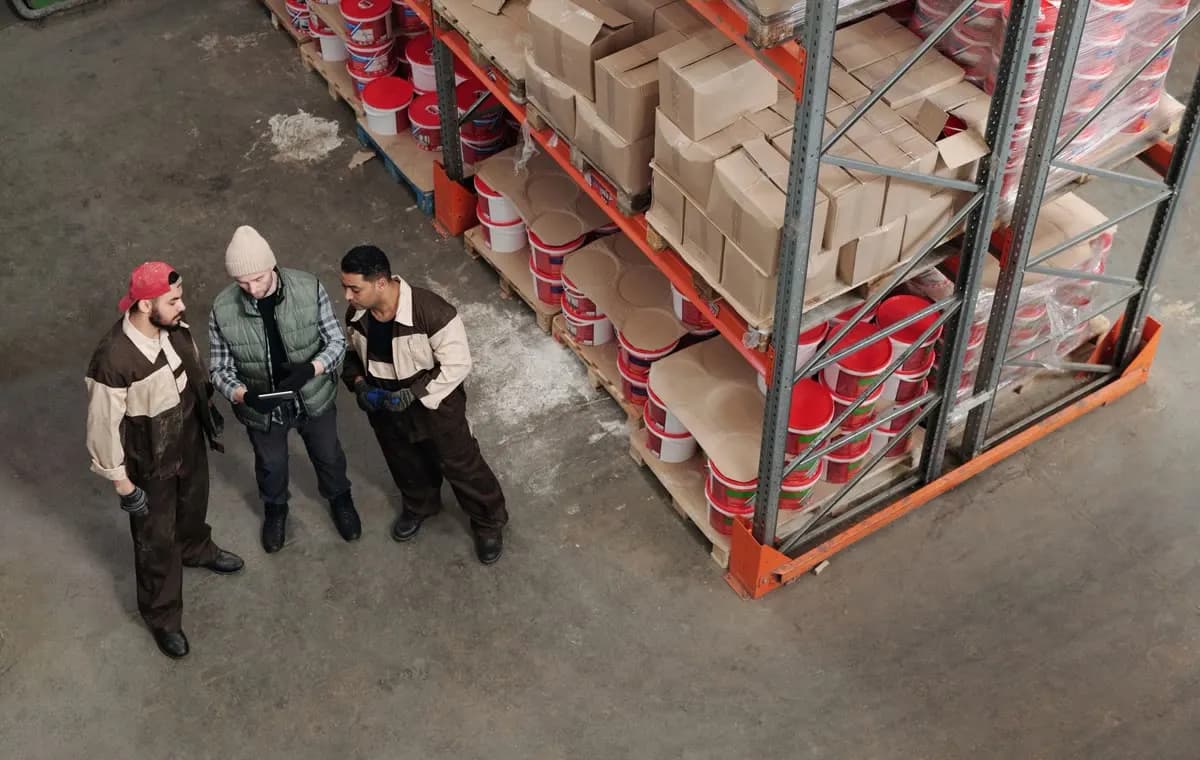
Gatekeeper view: what is visible from China-side
A Chinese-side visit can catch a different category of issues than an international auditor. Not better — different. The visiting agent reads signals through native-language access to the supplier's registered records and factory-floor context.
In practice, a Chinese-side visit can pick up whether the production line in use is the registered factory's own, or whether it has been sub-contracted to a smaller workshop with the registered factory's name presented. The check is concrete: cross-reference the machine signage and serial plates on the factory floor against the company's registered equipment list.
A Chinese-side agent can observe whether the workforce visible on the floor matches the operational scale claimed. If the company's filed annual report shows 200 employees but the factory floor has 40 workers and half the machines are idle, that is a signal.
The agent can verify whether the visited address is the actual production site or the registered business address — because in China, these are not always the same. The registered production address is publicly verifiable through NECIPS (National Enterprise Credit Information Publicity System, operated by SAMR at gsxt.gov.cn).
An international auditor provides a structured, English-language report that travels well across the buyer's downstream supply chain. Both audit types have their place. The choice depends on what risk the buyer is trying to surface.
Where this framework breaks
Orders under £10,000. The total verification overhead — even at the lowest tier — can exceed 5% of order value. For standard, non-regulated goods from a repeat supplier, this may not be justified. The decision shifts to whether PSI alone provides sufficient protection.
Highly regulated sectors (medical, aerospace). The decision tree undersells the audit requirement. Downstream customer audits demand full ISO or sectoral documentation regardless of order size. If you are importing medical-device components, UK MHRA guidance requires documented conformity assessment by a UK Approved Body. CE MDD certificates are accepted until expiry or 30 June 2028; CE MDR certificates until 30 June 2030. The audit cost is a regulatory compliance cost, not a risk-mitigation choice.
Suppliers with multiple production sites. The audit covers one location. If the supplier shifts production to a sister factory — or sub-contracts to a smaller workshop — between audit and order, the audit results do not transfer. The contract should specify the audited production address.
Repeat orders from a verified supplier. Diminishing returns on re-auditing. But material sub-supplier changes between orders can reset the risk. Consider a lightweight re-verification (Chinese-side agent, 1 day) rather than a full re-audit if the supplier is established but the materials or specifications have changed.
Remote and virtual audits. Lower cost (approximately 30% savings) but cannot verify physical production-line activity or workforce presence. Of the typical 20 audit points, roughly 8 require physical presence — floor walk, machine signage check, workforce count, materials storage inspection. Virtual audits can cover documentation points but miss the physical verification that is the audit's core value for industrial goods.
Trends layer
As of May 2026, UK MHRA's UKCA marking transition is extending deadlines but not reducing requirements: CE MDD/AIMDD certificates are accepted until expiry or 30 June 2028, and CE MDR certificates until 30 June 2030. Any business importing medical-device components or safety-critical engineered parts faces increasing pressure to document supplier audits regardless of order size. Simultaneously, mid-tier QC firms (QIMA, V-Trust) are publishing more transparent pricing and expanding online booking, making cost comparison easier than two years ago. The combined effect: audit costs are becoming more predictable, but the regulatory bar for what constitutes an adequate audit is rising in regulated sectors.
Coming up
Issue #22 (CSG-07 worked example): a 20-point factory audit checklist applied to a real engagement — what to ask the auditor to check, what pass and fail look like for each point, and how to read the results into your order decision.
Sources
GOV.UK import guidance, SAMR/NECIPS, UK MHRA guidance, ISO 9001 references, and published audit or inspection service references from SGS, QIMA, V-Trust, TradeAider, BSI and TUV support the sample, audit-tier, regulatory and China-side verification review points in this guide. Accessed or reviewed as part of the 2026-06-02 guide migration/review.
Control points before commitment
- On your next new-supplier RFQ (Request For Quotation), specify the sample type explicitly: "Produce one unit per the attached drawing, using the materials specified, with a written test report on [critical dimensions and finish], shipped via DHL at our cost." Do not accept an off-the-shelf sample as a golden sample substitute.
- Calculate your verification overhead as a percentage of order value. For a £45,000+ order, budget approximately £1,000 (samples + audit + PSI) as a 2% insurance cost. If this percentage feels high, compare it to the cost of a defective batch discovered after UK arrival.
- Decide the audit tier. Chinese-side agent for orders £20,000-£40,000 with standard goods. International firm for orders above £40,000 or regulated sectors. Full ISO or sectoral audit only if your downstream customer requires it or regulatory compliance demands it.
- Add the golden-sample sign-off clause to your PO (Purchase Order): "Production shall not commence until buyer signs off golden sample in writing." This clause costs nothing and provides the contractual quality reference for everything that follows.
Where Plinth&Co adds control
Plinth&Co helps buyers treat samples, audits and factory evidence as control gates rather than reassurance signals, keeping approval decisions tied to repeatable production checks. This is a buyer-side planning note, not legal, tax, customs or carbon-accounting advice; confirm final treatment with appointed providers or qualified specialists before acting. This is not legal advice, not tax advice, not customs advice and not carbon-accounting advice. Plinth&Co is not a factory. Plinth&Co is not a customs broker. Plinth&Co is not a tax adviser. Plinth&Co is not a law firm. Plinth&Co is not a carbon-accounting adviser.
Request a sourcing review