
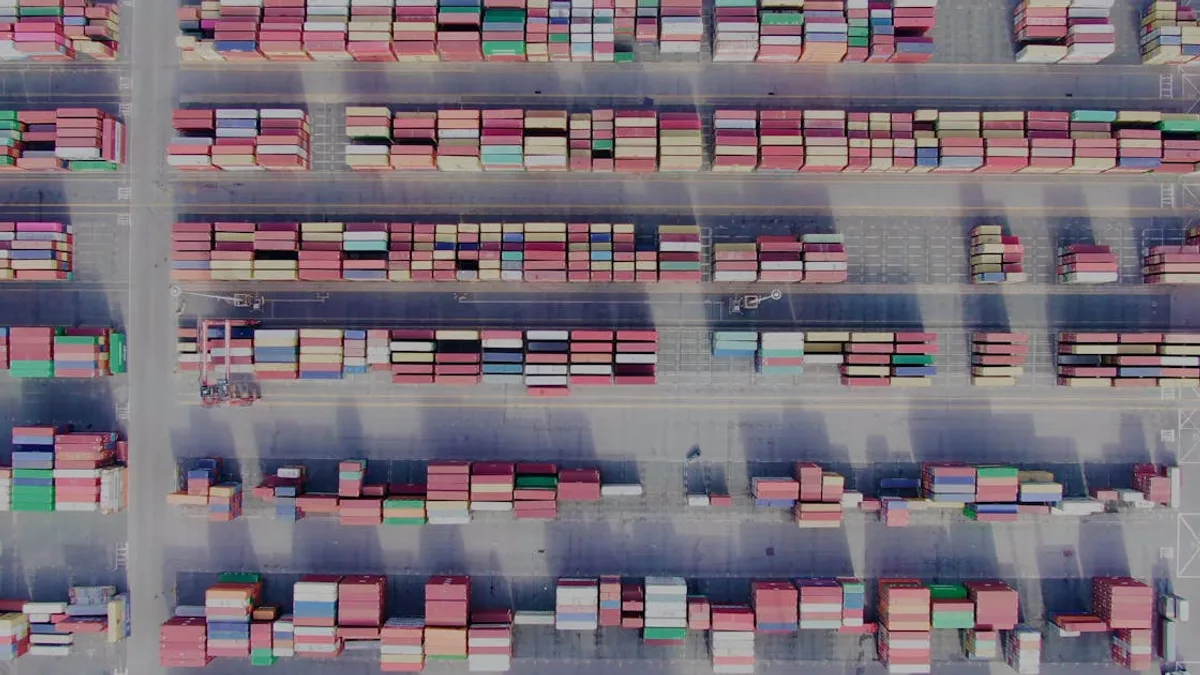
On 5 March 2026, the Trade Remedies Authority launched a formal anti-dumping investigation into imports of glass containers from China. The scope covers many glass containers under 2.5 litres, including jars and beverage bottles. A parallel anti-subsidy investigation covers Turkish imports. For UK buyers using China-origin packaging, this is a live signal with potential landed-cost consequences, but not yet a duty.
Understanding the distinction between an investigation and an imposed measure is the first practical decision point.
Reader walks away knowing
- What the investigation covers
- Why this matters to a UK industrial buyer
- Decision audit: the RFQ before measures are confirmed
- Cost model template: anti-dumping duty impact
What the investigation covers
The TRA's initiation follows an application from the UK domestic glass industry. The product scope is broad: any glass container under 2.5 litres, from food-grade jars to beverage bottles, falls within the investigation parameters. The full product definition is available on the TRA public file, and buyers whose supply chains include these items should cross-check their specific SKUs against that record.
The investigation is examining whether Chinese imports are being sold at below-normal value—that is, whether they are being dumped—and whether this is causing material injury to UK producers. If the TRA finds sufficient evidence of both, it may impose anti-dumping duties. The Turkish investigation follows a similar logic under anti-subsidy rules.
The critical point for buyers: this is initiation, not imposition. No duty exists today.
Why this matters to a UK industrial buyer
The signal affects sourcing in three ways.
Landed-cost uncertainty. If anti-dumping duties are later imposed on Chinese glass containers, buyers who have not factored that possibility into their cost model will face margin compression. Glass containers represent a visible input cost for food, beverage, and some specialty chemical supply chains. A duty of unknown magnitude—because the margin of dumping has not yet been determined—adds a variable to the landed cost formula that did not exist last week.
Supplier evidence requirements. Once an investigation opens, the TRA may request information from foreign producers and exporters. This can create pressure on Chinese suppliers to provide cost data, production records, and sales documentation. Some suppliers become less flexible on pricing during this period. Buyers should be aware that supplier cooperation with a TRA inquiry may affect how freely a supplier negotiates on an open RFQ.
Quote validity. If a buyer issues an RFQ today for products with glass container components, the supplier's quote may or may not account for potential future duties. This is not a failure of the supplier's candour—it is simply that neither party knows what the outcome will be. The question is whether the buyer's commercial terms account for that uncertainty.
Decision audit: the RFQ before measures are confirmed
Consider a UK industrial buyer preparing to issue an RFQ for a non-standard part that includes a glass container component sourced from a Chinese manufacturer. The buyer's current cost model treats the glass component at the supplier's quoted price, with standard ocean freight, insurance, and prevailing duty rate applied.
The TRA investigation changes the assumption set, not the quote itself. The buyer faces a decision:
- Issue the RFQ without amendment. The supplier quotes at today's price. If anti-dumping duties are imposed before delivery, the buyer absorbs the cost increase or renegotiates against a changed baseline.
- Amend the RFQ to include a duty-escalation clause. Request that the supplier's quote specify whether it holds firm for a defined delivery window, or whether it is subject to adjustment if duties change. Some suppliers will accommodate this; others will not.
- Shortlist alternative supply routes. The investigation covers China. If the buyer's product specification permits, qualifying a Turkish or domestic supplier may provide a reference point for the cost of supply outside the investigation's scope—even though the Turkish investigation is separate, it signals that the duty treatment of glass imports is under review more broadly.
The decision depends on the buyer's exposure: what proportion of the final landed cost is the glass container, and what is the delivery lead time relative to the likely investigation timeline?
Cost model template: anti-dumping duty impact
Where figures are not confirmed from primary sources, the landed cost formula with potential anti-dumping duty can be expressed as:
Landed Cost = (Unit Price + Freight + Insurance) × (1 + Duty Rate) + Import VAT
If an anti-dumping duty is imposed on Chinese glass containers, the duty rate replaces or supplements the standard MFN rate. The anti-dumping margin—which the TRA has not yet published—determines that rate. Until the investigation concludes and the TRA publishes its provisional or definitive duty rate, the landed cost formula contains an unresolved variable.
A buyer with a glass-dependent product can model the cost impact by substituting a range of hypothetical duty rates into the formula and assessing at which point the sourcing decision changes. This is a sensitivity analysis, not a forecast.
Control points before the next commitment
Before placing a deposit or signing a long-lead purchase order for glass-container components from China, a UK industrial buyer should:
- Confirm product scope. Check the TRA public file against the specific glass container SKUs in the supply chain. Not all glass products are within scope; misidentifying the affected items creates unnecessary cost assumptions.
- Review existing supplier contracts. Determine whether current agreements include duty-pass-through provisions, price-reopening clauses, or force-majeure language that covers regulatory duty changes. The answer affects whether the buyer or supplier bears the cost if duties are imposed mid-contract.
- Request duty-escalation language in new RFQs. For any RFQ issued while the investigation is live, ask the supplier to state whether the quoted price is fixed for the stated lead time or subject to adjustment for duty changes. This is a commercial negotiation, not a legal guarantee, but it creates a clearer baseline.
- Track the TRA timeline. Investigations proceed through stages: initiation, questionnaire period, preliminary determination, and final determination. Each stage may produce new information about the likely duty rate or scope. The TRA publishes case updates on its public file and through its case management system.
- Assess alternative sourcing as a reference point. Even if China remains the primary source, obtaining a quote from a non-investigated supplier provides a benchmark against which the Chinese landed cost with potential duties can be compared. This is a sourcing intelligence action, not a commitment.
Sources
From preserves to packaging – helping British glass shine: www.gov.uk/government/news/from-preserves-to-packaging-helping-british-glass-shine – Trade Remedies Authority, 5 March 2026
Control points before commitment
- Confirm product scope. Check the TRA public file against the specific glass container SKUs in the supply chain. Not all glass products are within scope; misidentifying the affected items creates unnecessary cost assumptions.
- Review existing supplier contracts. Determine whether current agreements include duty-pass-through provisions, price-reopening clauses, or force-majeure language that covers regulatory duty changes. The answer affects whether the buyer or supplier bears the cost if duties are imposed mid-contract.
- Request duty-escalation language in new RFQs. For any RFQ issued while the investigation is live, ask the supplier to state whether the quoted price is fixed for the stated lead time or subject to adjustment for duty changes. This is a commercial negotiation, not a legal guarantee, but it creates a clearer baseline.
- Track the TRA timeline. Investigations proceed through stages: initiation, questionnaire period, preliminary determination, and final determination. Each stage may produce new information about the likely duty rate or scope. The TRA publishes case updates on its public file and through its case management system.
- Assess alternative sourcing as a reference point. Even if China remains the primary source, obtaining a quote from a non-investigated supplier provides a benchmark against which the Chinese landed cost with potential duties can be compared. This is a sourcing intelligence action, not a commitment.
Buyer-side control
Treat this briefing as a decision check before the next RFQ, deposit, shipment release or customs instruction. Confirm the live source record before using it as commercial advice. This is a buyer-side planning note, not legal, tax, customs or carbon-accounting advice; confirm final treatment with appointed providers or qualified specialists before acting. This is not legal advice, not tax advice, not customs advice and not carbon-accounting advice. Plinth&Co is not a factory. Plinth&Co is not a customs broker. Plinth&Co is not a tax adviser. Plinth&Co is not a law firm. Plinth&Co is not a carbon-accounting adviser.
Request a sourcing review