
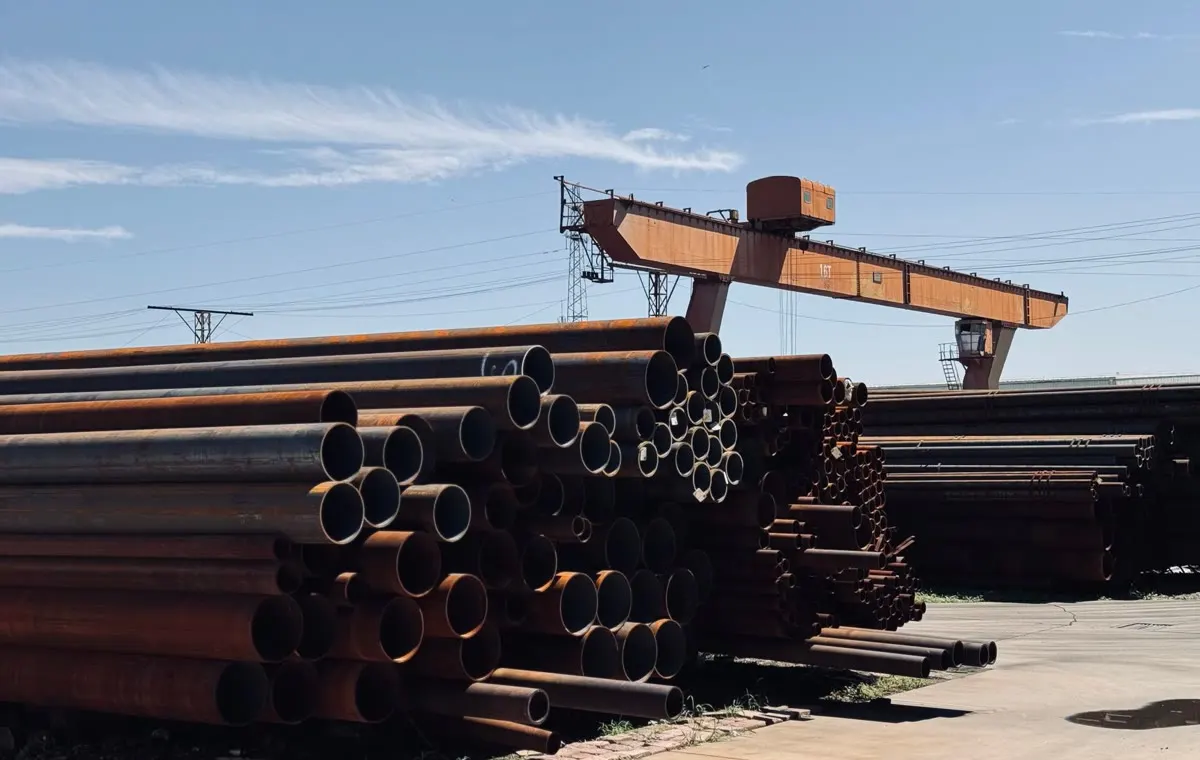
The Trade Remedies Authority (TRA) has published its initial findings in the expiry review of the anti-dumping measure covering welded tubes and pipes originating in Belarus and China. The proposal is to keep the measure in place for a further five years from 27 April 2026. For China, the GOV.UK notice states that the proposed anti-dumping duty would be 90.6% for all Chinese exporters.
Reader walks away knowing
- What changed
- Why this matters to a UK buyer
- A practical scenario
- The cost model
What changed
The Trade Remedies Authority (TRA) has published its initial findings in the expiry review of the anti-dumping measure covering welded tubes and pipes originating in Belarus and China. The proposal is to keep the measure in place for a further five years from 27 April 2026. For China, the GOV.UK notice states that the proposed anti-dumping duty would be 90.6% for all Chinese exporters.
That is the headline. The detail that matters for buyers: an initial finding is not a final determination. The measure remains live during the review window, and the final decision could, in principle, diverge from the proposal. Until the final decision is published, a buyer should treat the current measure as an active landed-cost condition, not a background legal footnote.
Why this matters to a UK buyer
Welded tubes and pipes fall under a category where anti-dumping duties can dominate the landed-cost calculation. For a UK industrial buyer buying industrial parts from China, the difference between a base import-duty assumption and an anti-dumping measure at the level stated in the notice is not a rounding issue. It can change whether the quote is commercially usable at all.
The practical risk is not only the duty rate itself. It is the evidence layer. The buyer needs to know whether the goods fall within the product scope, whether China is the declared origin, whether the exporter falls under the rate stated in the notice, and whether the forwarder has modelled the measure before the buyer approves payment or shipment release.
The current environment also means that any new purchase orders placed now need an explicit trade-remedy check before they are treated as viable. Buying against a live anti-dumping measure without confirming product scope and origin is equivalent to approving a quote without reading the small print on landed cost.
A practical scenario
Consider a UK industrial buyer that has received a quotation from a Chinese mill for a consignment of welded tubes, CIF UK port, priced at £45,000. The buyer is deciding whether to confirm the order, renegotiate the price, or wait for the final decision before committing funds.
The immediate question is not whether the goods are cheaper or more expensive than a domestic alternative. It is whether the quote, plus the applicable import charges, is what the business actually expects to pay on the day of customs clearance. With the measure proposed to continue, the buyer should model the landed cost against the trade-remedy condition in the notice, not against a clean base-duty assumption.
If the buyer proceeds without verifying product scope, origin and applicable duty treatment, the quote can look competitive before import charges and unusable afterwards. If the final decision changes the terms, any unshipped balance on the order needs to be reviewed again before release.
The cost model
The landed cost for a China-origin welded tube consignment can be expressed as a template, with variables that must be confirmed against the specific HS code and current measure schedule:
> Landed Cost = CIF + (CIF × ADD rate) + (CIF × import duty rate) + [(CIF + ADD + import duty) × 20%] + clearance fees
For a consignment valued at CIF = £45,000, the variable components are:
| Component | Variable | Status for buyer |
|---|---|---|
| CIF value | CIF | Quoted by supplier |
| Anti-dumping duty rate | ADD | GOV.UK notice states proposed China rate of 90.6%; confirm product scope before use |
| MFN import duty rate | DUTY | Confirm against current UK trade tariff for your HS code |
| VAT | 20% on (CIF + ADD + DUTY) | Standard rate on dutiable value |
| Clearance fees | AGENT | Confirm with freight forwarder or customs broker |
If ADD and DUTY treatment are not confirmed from the official UK trade-remedy notice, UK Trade Tariff record and broker declaration basis, the landed cost is not calculable. It is a quotation, not a cost.
What to ask before money moves
Before confirming any purchase order or releasing payment against a quoted shipment of welded tubes or pipes from Belarus or China, the following questions need direct answers from your supplier, freight forwarder, or customs broker:
- What is the specific 8-digit or 10-digit HS code for these goods? Anti-dumping measures are applied at subheading level; the wrong code can mean the wrong rate.
- Does the shipment fall within the product scope of the measure? The GOV.UK notice states a proposed China rate, but the buyer still needs the broker to confirm that the goods being imported are actually in scope.
- Is China the country of origin for customs purposes? Country of dispatch and country of origin are not the same question.
- Has the broker checked the UK Trade Tariff measure for the exact commodity code? The GOV.UK news item is the trigger, not the full declaration record.
- Has the final decision date been confirmed by the TRA? If it falls before your expected clearance date, you need to know whether the treatment has changed.
- Are there any unshipped balances on existing orders that should be reviewed again? This is particularly relevant for orders placed before the initial findings were published.
Monday-morning checklist
- [ ] Pull the current UK trade tariff entry for your welded tube/pipe HS code and confirm both the MFN rate and any anti-dumping measure schedule.
- [ ] Identify whether your named supplier is listed in the current anti-dumping measure schedule or operates under an individual rate.
- [ ] Review all open purchase orders and confirm which shipments have not yet been customs-cleared.
- [ ] Model the landed cost using the formula above, inserting confirmed rates rather than estimates.
- [ ] Contact your freight forwarder or customs broker to confirm how the measure is treated for your exact HS code and country of origin.
- [ ] Flag any orders placed before the TRA initial findings date — these may require monitoring if the final determination changes the rates.
- [ ] If renegotiation with the supplier is needed, do it now, before the final determination closes the window.
Sources
Trade Remedies Authority, *Welded tubes and pipes expiry review reaches initial findings*, GOV.UK, 2026. Available at: www.gov.uk/government/news/welded-tubes-and-pipes-expiry-review-reaches-initial-findings (accessed 2026-05-18).
HMRC, *VAT rates*, GOV.UK. Available at: www.gov.uk/vat-rates (accessed 2026-05-18).
Control points before commitment
- [ ] Pull the current UK trade tariff entry for your welded tube/pipe HS code and confirm both the MFN rate and any anti-dumping measure schedule.
- [ ] Identify whether your named supplier is listed in the current anti-dumping measure schedule or operates under an individual rate.
- [ ] Review all open purchase orders and confirm which shipments have not yet been customs-cleared.
- [ ] Model the landed cost using the formula above, inserting confirmed rates rather than estimates.
- [ ] Contact your freight forwarder or customs broker to confirm how the measure is treated for your exact HS code and country of origin.
Buyer-side control
Treat this briefing as a decision check before the next RFQ, deposit, shipment release or customs instruction. Confirm the live source record before using it as commercial advice. This is a buyer-side planning note, not legal, tax, customs or carbon-accounting advice; confirm final treatment with appointed providers or qualified specialists before acting. This is not legal advice, not tax advice, not customs advice and not carbon-accounting advice. Plinth&Co is not a factory. Plinth&Co is not a customs broker. Plinth&Co is not a tax adviser. Plinth&Co is not a law firm. Plinth&Co is not a carbon-accounting adviser.
Request a sourcing review