
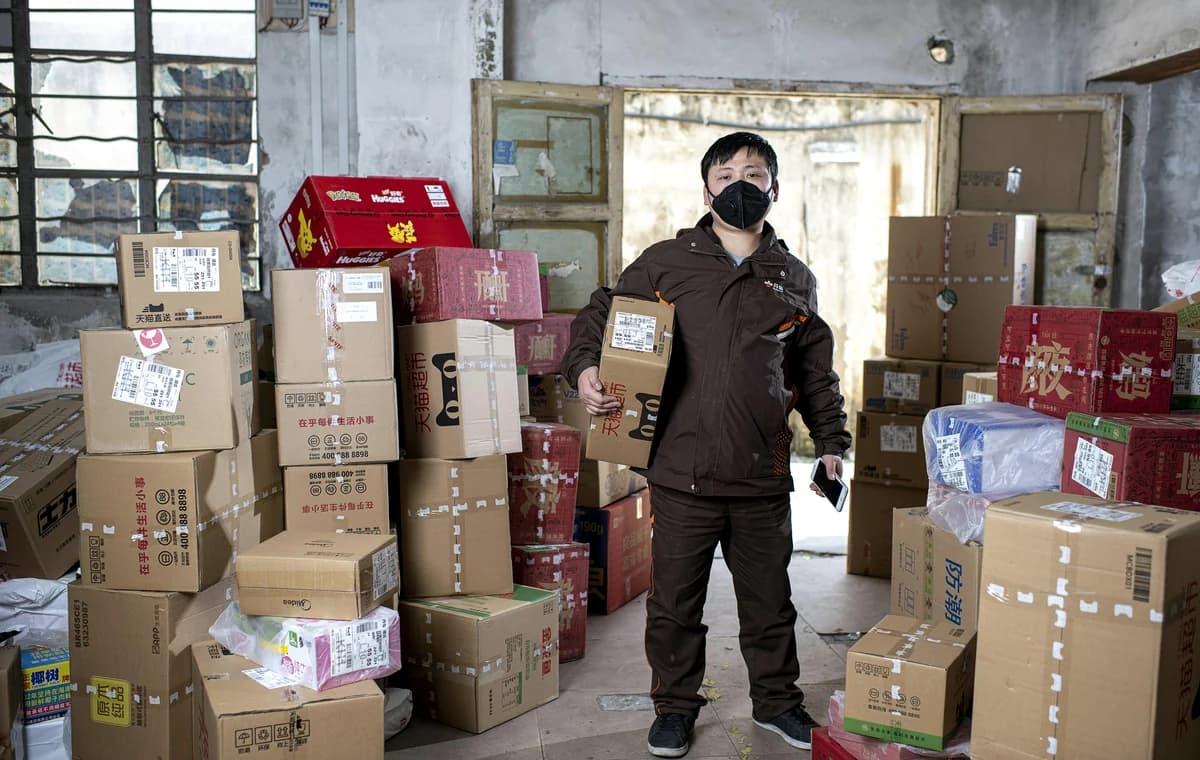
You have a shortlist of supplier candidates. Their Alibaba profiles say "manufacturer." Their sales reps confirm it: "Yes, we are the factory." You have product photos, maybe a brochure showing a production line with workers in branded uniforms. It looks credible.
None of it is independently verifiable. An Alibaba "manufacturer" tag reflects the platform's own audit criteria, not the Chinese government's registration data. A sales rep's claim is marketing. A brochure photo of a production floor could belong to any factory in the same industrial park. Trading companies routinely present themselves as factories on B2B platforms — this is standard commercial practice, not fraud, but it changes your cost structure. A trading company applies its own commercial margin on top of the factory price, and that margin is invisible to you unless you can confirm who you are actually buying from.
There are five checks that use Chinese public records to produce screening signals. None is categorical proof. Together, they give you a materially better picture than any amount of platform browsing.
Reader walks away knowing
- For context: where else can you get this
- Check 1: SAMR business registration lookup
- Check 2: Customs export-history evidence
- Check 3: Factory video request
For context: where else can you get this
You could ask the supplier directly, but they have obvious incentives. You could pay a factory auditor — working budget of £200-£800 per candidate, as of May 2026, based on published service catalogues from SGS, QIMA, and V-Trust. You could rely on Alibaba badges, but those verify platform criteria, not PRC registration data. Blog posts list generic tips ("ask for a factory video") without walking through the actual Chinese public-record systems. This article covers five specific checks using Chinese public records and operational evidence. As a working estimate, the first four checks usually take 30-60 minutes per candidate and require no third-party fee.
Check 1: SAMR business registration lookup
The National Enterprise Credit Information Publicity System (国家企业信用信息公示系统, abbreviated NECIPS) is operated by the State Administration for Market Regulation (SAMR). It is the Chinese government's mandatory corporate disclosure platform, established under State Council Decree No. 654 (2014). Public query access is available through the official system, although the portal may require user verification or browser-based access. You need the supplier's registered Chinese company name (中文公司全称) — usually findable on their Alibaba "Company Profile" page.
Search the official NECIPS/GSXT portal for that name. The direct gsxt.gov.cn portal may require browser-based Chinese-language access or verification; commercial aggregators can help navigate, but the official registry remains the source to check. Read four fields:
Registered capital vs paid-up capital (注册资本 vs 实缴资本). Under the PRC Company Law 2013 amendment, China removed the requirement to pay up capital before registration. Companies could declare any registered capital figure without contributing a single yuan. The 2023 amendment (effective 1 July 2024) reintroduced discipline: Article 47 now requires all subscribed capital to be fully paid within five years of establishment. Existing limited liability companies must adjust by 30 June 2032; joint-stock companies by 30 June 2027.
What this means for you: registered capital is a marketing number. A company declaring RMB 10 million in registered capital may have paid in zero. Paid-up capital, when disclosed, is a more useful signal of operating substance, but during the 2024-2032 transition window the disclosed paid-up figure may lag actual contribution or filing updates. A factory with significant machinery and premises typically has meaningful paid-up capital. A trading company operating from an office may not.
Business scope (经营范围). A scope including 制造 (manufacturing) or 生产 (production) is consistent with a factory. A scope describing only 销售 (sales) or 贸易 (trade) is consistent with a trading company. This is a consistency check, not proof — some companies register both.
Administrative penalties (行政处罚信息). Visible on the Chinese-language registry, often absent from English-language platform profiles. Worth reading.
Annual reports (年报). Filed once per year, summarising revenue brackets and headcount — another indicator of operational scale.
Check 2: Customs export-history evidence
China's General Administration of Customs (海关总署) publishes aggregate trade statistics by HS code, by trading partner, and by mode of trade. These aggregates confirm whether HS-matched export activity has occurred from China in a given product category. They are public and free.
However — and this is a critical distinction — company-level transaction data is not publicly accessible. Public customs data shows that China exported £X million of HS chapter 84 goods to the UK last quarter. It does not show that Company ABC exported £Y of those goods. Transaction-level, company-specific export data requires licensed data providers, typically costing several hundred pounds per report.
The practical screening signal: if you are buying a product in HS chapter 73 (iron and steel articles) and aggregate customs data shows minimal China-to-UK export activity in that subheading, the supplier's claim of extensive UK export experience deserves further questions. If aggregate data shows robust activity, the claim is at least plausible — but you still cannot confirm it was this specific company.
Check 3: Factory video request
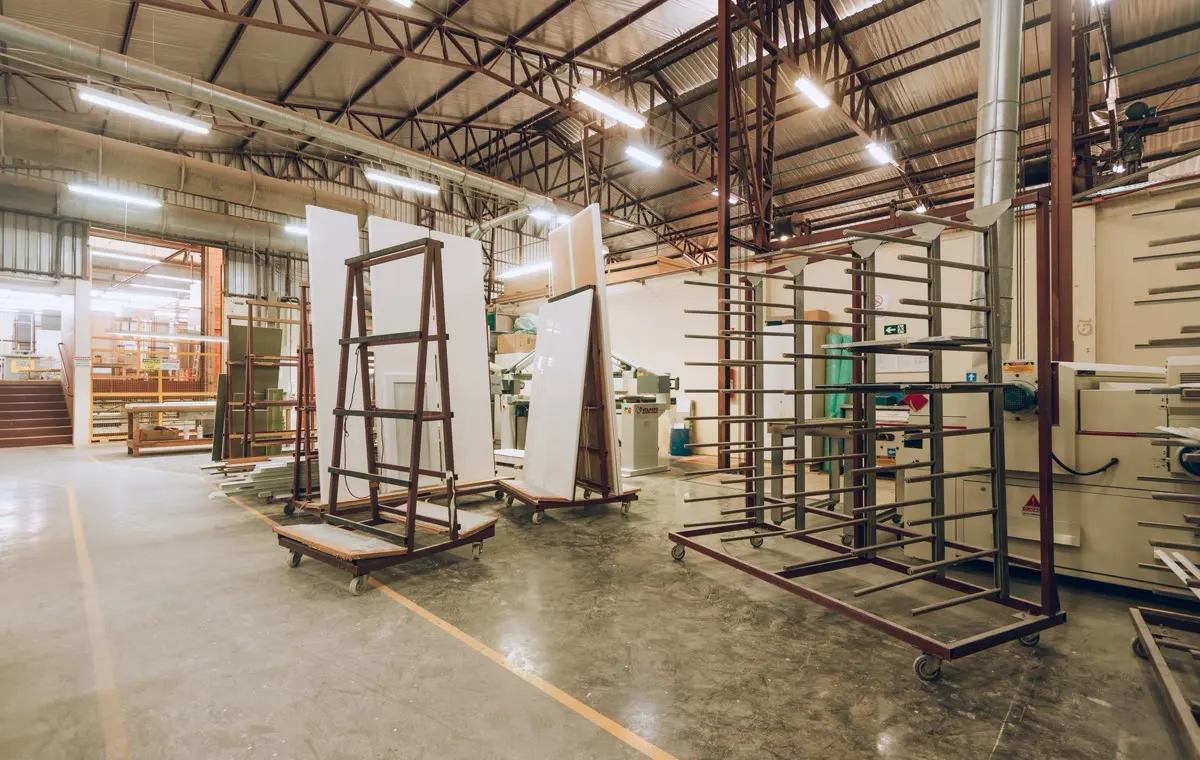
This is the operational check. Send the supplier a specific request: film a video tomorrow (specify the date), showing the production line running for your product category, with company signage visible at the front gate, and the person filming walking continuously from the gate to the production floor.
The specificity matters. A date requirement prevents the use of archived footage. The walk-through requirement prevents splicing clips from different locations. Company signage links the facility to the registered entity.
A supplier who can comply within 2-3 days is consistent with operating a factory. A supplier who delays without clear explanation, sends generic stock footage from an unrelated factory, or provides a video where signage does not match their registered company name — each is a flag worth noting. Not proof of deception, but a signal that warrants further checks.
Check 4: VAT invoice capability
Under Chinese VAT rules, the distinction that matters is not manufacturer versus trader. It is the supplier's taxpayer status and invoice process: general taxpayer (一般纳税人) versus small-scale taxpayer (小规模纳税人), and whether the supplier can issue the invoice type your file requires.
A general taxpayer — whether manufacturer or trader — can issue special VAT invoices (增值税专用发票). Since State Taxation Administration Announcement 2019 No. 33, small-scale taxpayers other than individuals can also voluntarily use the VAT invoice management system to issue special VAT invoices when needed. The State Taxation Administration is currently transitioning to fully digital e-invoices (全面数字化的电子发票), which is further standardising the system.
The screening signal: if a supplier claiming to be a substantial factory cannot clearly explain its taxpayer status, invoice type, and issuing process, the claim deserves a follow-up. This is one signal among five, not a standalone proof. Both general-taxpayer manufacturers and general-taxpayer traders can issue special VAT invoices, and some small-scale taxpayers can issue them under the post-2019 rules. The check catches process inconsistency, not a clean factory-versus-trader distinction.
Check 5: Site visit or third-party operational check
The first four checks are public-record and communication checks. The fifth check is operational confirmation: a site visit, third-party audit, or China-side agent walk-through when the order value, product risk, or deposit size justifies it.
This is not needed for every shortlist candidate. It matters before deposit on high-value, non-standard, or quality-sensitive orders because it closes the gap between registration evidence and actual production control. A supplier can have manufacturing in its business scope and still outsource your specific product. The site check asks a narrower question: who controls the line, tooling, inspection records, and packing process for this order?
When a trading company is actually the right choice
Do not reflexively reject a candidate that screens as a trading company. Three scenarios where a trading company is the better option:
Consolidated orders across multiple factories. If your product line includes components from three different manufacturers, a trading company that manages all three relationships, handles quality coordination, and consolidates shipments can reduce your management overhead materially. The margin they charge is the cost of that coordination.
Export licensing for regulated categories. Some product categories require specific export licences. A trading company with the relevant licences and experience navigating China's export control regime may be the only practical route, particularly for a first-time buyer.
Financial intermediation. When a factory will not accept your preferred payment terms — perhaps they require 100% T/T upfront, or they do not have the banking infrastructure for L/C — a trading company can bridge the gap. They pay the factory on terms the factory accepts and sell to you on terms you can manage.
The point: know whether you are buying from a factory or a trader. Price accordingly. A trading company is not a problem — an unidentified trading company charging factory-direct prices is.
Gatekeeper view: what is visible from China-side
Reading the SAMR filing in Chinese reveals what English-language platform listings either translate poorly or omit entirely.
Administrative penalty records (行政处罚信息) are visible on the Chinese-language NECIPS entry. A UK buyer reading only the English Alibaba profile would never see that the company was fined for a workplace safety violation or flagged for abnormal operations (经营异常名录). The "abnormal operations" listing is a particularly strong signal — it means the company failed to file required annual reports or could not be contacted at its registered address. This is publicly visible on NECIPS but invisible on any English-language B2B platform.
Annual report filings (年报) in Chinese summarise actual revenue brackets and employee headcount. A supplier claiming 500 workers and RMB 50 million in annual revenue should have annual report data roughly consistent with those claims. Significant discrepancies are a prompt to ask further questions.
Ownership chain (股东信息) reveals whether the candidate is a subsidiary of a larger group or an independent entity. A factory that turns out to be 100% owned by a known trading group is a different proposition from an independent manufacturer — not necessarily worse, but different, and worth understanding before pricing conversations begin.
Where this framework breaks
Hybrid operations. Some companies are genuinely both factory and trader: they manufacture certain products and trade others sourced from partner factories. The SAMR business scope may include both 制造 and 销售. The five-check routine flags this as ambiguous, not as a failure. You need to determine which category your specific product falls into — and a direct question to the supplier, backed by the evidence you have gathered, is more productive than the same question asked without evidence.
Shell registrations. A trading company can register a business scope that includes manufacturing without operating a factory. The SAMR registration is a legal filing, not an operational audit. This is why the factory video (Check 3) and site visit (Check 5) exist — they provide operational evidence that the registration alone does not.
Regional variation in data quality. Some Chinese provinces have more complete, more accessible online SAMR filings than others. A candidate in a well-documented coastal province may have a richer data trail than one in an inland region with sparser digitisation.
VAT check limitations. Some trading companies with manufacturing subsidiaries can issue special VAT invoices. Some small-scale manufacturers operate on simplified VAT schemes. This check is one signal of five, not a standalone diagnostic.
The routine requires the Chinese company name. The reader needs the supplier's registered Chinese company name to search the SAMR registry. Most suppliers list it on their Alibaba "Company Profile" page. Some use a different trading name on the platform than their registered name. If the supplier will not provide their registered Chinese name, that is itself a signal.
Trends layer
As of May 2026, PRC Company Law reforms continue to reshape the relationship between registered capital and operational substance. The 2024 amendments introduced transition provisions for companies registered under the old capital-subscription rules. For UK buyers, the practical implication is that capital-structure data on NECIPS is in flux during the 2024-2032 transition period. Registered capital remains a marketing number. Paid-up capital and actual operational evidence — customs data, factory videos, site visits — are more reliable signals than the headline registration figure. The five-check routine accounts for this by treating capital as one input among several, not as a standalone indicator.
Coming up
Issue #14 runs the full five-check routine on one real (anonymised) supplier — a complete walkthrough from SAMR filing to conclusion, annotated step by step.
Issue #15 moves to the next stage: once you have a verified factory, how do you structure the RFQ to get comparable, auditable quotes.
Sources
SAMR/NECIPS/GSXT, PRC Company Law, China's General Administration of Customs, the State Taxation Administration, Alibaba, and published service catalogues from SGS, QIMA and V-Trust support the public-record, customs, VAT-invoice and audit-cost review references in this guide. Accessed or reviewed as part of the 2026-06-02 guide migration/review.
Control points before commitment
- Pick one supplier candidate you are about to issue an RFQ to — the one you are most uncertain about.
- Find their registered Chinese company name. Check their Alibaba "Company Profile" page, or ask them directly.
- Search the official NECIPS/GSXT record for that name. Note: registered capital, paid-up capital, business scope keywords (制造/生产 vs 销售/贸易), and any administrative penalties or abnormal-operations flags.
- Send a factory video request: specify tomorrow's date, ask to see the production line running for your product category, company signage visible, and a continuous walk from the front gate to the production floor.
- Based on the SAMR data and the video response, update your shortlist. Does this candidate move forward to sample stage, or does the evidence warrant re-evaluation?
Where Plinth&Co adds control
Plinth&Co reads supplier claims against China-side public records, communication behaviour and production evidence so the buyer understands who is really pricing, producing and taking margin before the deposit moves. This is a buyer-side planning note, not legal, tax, customs or carbon-accounting advice; confirm final treatment with appointed providers or qualified specialists before acting. This is not legal advice, not tax advice, not customs advice and not carbon-accounting advice. Plinth&Co is not a factory. Plinth&Co is not a customs broker. Plinth&Co is not a tax adviser. Plinth&Co is not a law firm. Plinth&Co is not a carbon-accounting adviser.
Request a sourcing review